HOMELESSNESS IN AMERICA AND BEYOND

Throughout the years, the United States (U.S.) has been affectionately called “The Land of Opportunity”. It is a country that many feel offers opportunities for personal growth and financial success if you are ambitious and work hard. Condoleezza Rice, who was the first female African-American secretary of state and the first woman to serve as National Security Advisor echoed many of these sentiments and has publicly shared that “what has always made our country special is that it doesn’t matter where you come from; it matters where you’re going”.

Many individuals and families have migrated to the United States in hopes of achieving “The American Dream”, the belief that upward mobility is possible for anyone, regardless of where they were born, their race, their religion, or social status. However some question how prosperity is possible for some while others struggle to survive, and in some cases only being a paycheck away from poverty and homelessness. What happened to their “American Dream”?

Food, clothing, and shelter are some of the basic necessities for human survival, yet millions of people go without both in the the U.S. and around the world. According to the National Homelessness Law Center (https://nlchp.org/) there are approximately 3.5 million people who are experiencing homelessness in America. Additionally, there are an estimated 150 million people globally who are homeless as well as an estimated 1.6 billion people lacking adequate or appropriate housing (https://yaleglobal.yale.edu/content/cities-grow-so-do-numbers-homeless). It is also estimated that that approximately 40% of american are only one paycheck away from poverty (https://prosperitynow.org/sites/default/files/resources/2019_Scorecard_Key_Findings.pdf). Homelessness is also exacerbated by economic downturns related to challenges such as war, natural disasters, or pandemics.

No one aspires to be homeless, but unfortunately there are a lot of stigmas associated with the homeless populations such as: laziness, uneducated, and lacking morals. To the contrary, homelessness is generally the result of drastic changes in ones life which include the loss of a job, the death of a loved one, divorce, domestic violence, alcoholism, drug addiction, untreated mental illness or family disputes. The true story of Chris Gardner is an example of a person that was likely judged for being homeless, despite having tremendous potential.

Chris Gardner had a troubled childhood which included not knowing who his father was, being abused by his stepfather, and being placed in foster care after his mom was sentenced to prison. However, years later, Gardner credited his mom’s advice for not letting the events in his childhood destroy him. His mom would tell Gardner, “You can only depend on yourself. The cavalry ain’t coming.” These words would eventually become Gardner’s mantra and help pave the way to his international success. (Chris Gardner, The pursuit of Happyness (New York: HarperCollins e-Books, 2014), 1-12.

In the early 1980s, Gardner and his young toddler were homeless for about a year in San Francisco, California. Gardner had accepted full custody of his young son when his ex no longer wanted the responsibility. During the year that Gardner was homeless he stayed at places like flophouses, parks, airports, church shelters, and at one point, a toilet stall at a transit station. Gardner and his son also ate at soup kitchens and what little money they had was used for daycare services for his son while Gardner worked. Gardner’s tumultuous journey through life also consisted of being arrested for $1200 worth of unpaid parking tickets due to his lack of income.

Despite the many twists and turns in Gardner’s life, he eventually found success as a stock broker, a business owner (establishing his own brokerage firm, “Gardner Rich & Co in 1987”), and eventually becoming a motivational speaker. In 2006, a biographical drama film was released about his life called, “Pursuit of Happyness”, featuring actor Will Smith as Chris Gardner and Smith’s son (Jaden Smith) as Chris Gardner’s son.

My personal and professional experience with homelessness has taught me to quickly pondered a homeless person’s situation, rather than judge them for it. This is something that we should all strive to do since nearly half of all Americans are a “paycheck” or “tragedy” away from being homeless.

ADJUSTING TO CHANGE

Image By dbking

“You can please some of the people all of the time, you can please all of the people some of the time, but you can’t please all of the people all of the time”….English Poet John Lydgate

The World’s human population is an estimated 7.8 billion and spans nearly 200 countries worldwide. This means our world is filled with billions of individuals who differ in many ways to include their personalities, religious beliefs, and political views. Given these statistics, it would be fair to say that humans will never agree on everything. Environmental and biological factors also affect our ability to agree as well. This should therefore be of no surprise that when significant changes occur in our lives (either individually or collectively) it will not resonate well with everyone. An example of this is when a mob of rioters stormed the United States (U.S) Capitol building on January 6, 2021 in an attempt to overturn President Donald Trump’s defeat in the 2020 presidential election. The riot led to five deaths as well as the evacuation and lock-down of the U.S Capitol building.

The U.S .Capitol attack was not the first of its kind against political leaders in the U.S. or around the world. For example, shortly after Abraham Lincoln was elected to the presidency in November of 1860, seven southern states seceded from the Union and four more followed after his inauguration. The southern states who were opposed to new political and social changes were convinced that their way of life (which was largely based on slavery) would be threatened. Consequently, a Confederate sympathizer and well-known stage actor, (John Wilkes Booth), assassinated President Abraham Lincoln at Ford’s Theatre in Washington, D.C. just five days after General Robert E. Lee surrendered his Confederate troops to Commanding U.S Army General Ulysses S. Grant. General Granted led the U.S. Army to victory during the American Civil War – a war that eventually resulted in the freeing of slaves.

At the time of Lincoln’s death, there was no modern day Secret Service. In 1865, the Secret Service, was initially established as a specialized branch of the Department of the Treasury to combat widespread counterfeiting (https://www.britannica.com/topic/US-Secret-Service). However, it wasn’t until 1902, that the Secret Service assumed the full-time responsibility of protecting the president after the assassination of President William McKinley (https://www.smithsonianmag.com/smart-news/how-president-william-mckinleys-assassination-led-modern-secret-service-180964868/).

During the 2021 presidential inauguration of President-elect Joseph R. Biden, Jr., nearly 25,000 troops were on guard at the U.S. Capitol in an effort to prevent security threats like the January 6th U.S. Capitol attack. This is believed to be the largest security presence of troops of any inauguration in American History.

History is filled with stories about individuals and groups who are opposed to the status quo and/or what they perceive to be “negative” changes. The following are significant political and social reforms that many individuals and groups were opposed to but that became defining events in the U.S. history.

THE WOMEN’S RIGHT MOVEMENT

Image by pingnews

On 01/20/2021, Kamala Harris became the first female, first black, and first Asian-American U.S. elected Vice-President. However, the journey towards this achievement had very humble beginnings before women even had the right to vote. Women’s right to vote became a reality after nearly a century of protests which gained more traction nationally in July 1848 during the Seneca Falls Convention. The focus of the convention was to discuss the social, civil, religious conditions, and rights of women.

The term “Suffrage” was commonly associated with the Women’s Rights Movement. “Suffrage” is derived from the Latin word, “suffragium”, meaning the right or privilege to vote. The Women’s Rights Movement began prior to the American Civil War (1861-1965). However, the demand for women’s suffrage began to gather steam in the 1840s.

In 1869, Susan B. Anthony and Elizabeth Cady Stanton founded the National Woman Suffrage Association (NWSA). Activists of the organization, lobbied state governments to enact laws granting or expanding women’s right to vote in the U.S.

In February of 1890, National American Woman Suffrage Association (NAWSA) was formed. The NAWSA was the merger of two existing organization, ( the National Woman Suffrage Association (NWSA) and the American Woman Suffrage Association (AWSA)). The NAWSA was instrumental in the passage of the 19th Amendment to the United States Constitution in 1920 which granted women the right to vote. However, despite this achievement, widespread disenfranchisement and violence continued for people of color for decades to follow.

Opposition to voting rights for women may seen foreign in modern day American, especially when the opposition is being spearheaded by women. However, during the struggle for women’s rights to vote emerged the National Association Opposed to Woman Suffrage (NAOWS). The organization was formed in 1911 and was organized and led by Josephine Dodge. The NAOWS believed that women suffrage would decrease women’s work in communities and their ability to effect societal reforms. The organization disbanded in 1918 following the passage of the 19th Amendment.

LOVING V/S VIRGINIA

Image by Skley

The 14th Amendment to the U.S. Constitution (which guarantees equal protection of the law), was one of three amendments passed during the American Reconstruction era (1863-1877) to abolish slavery and establish civil and legal rights for Black Americans. The 14th Amendment helped to strength the Women’s Rights Movement and also has become the basis for many landmark Supreme Court cases, such as “Loving v/s Virginia”.

Richard Loving and Mildred Jeter, were an interracial couple from the town of Central Point in Caroline County, Virginia. They were longtime friends who had fallen in love. In June of 1958, they got married in Washington D.C. because interracial marriages were illegal in the state of Virginia. Five weeks after they had returned to their home state of Virginia, they were arrested in the early morning hours at their home by the local sheriff office. They were eventually indicated on felony charges of violating Virginia’s anti-miscegenation law, which deemed interracial marriages illegal.

There legal battle began in 1963 and with the aid of two young American Civil Liberties (ACLU) lawyers (Bernard Cohen and Philip Hirschkop). The two lawyers would go on to argue before the Supreme Court that the State of Virginia’s anti-miscegenation law was illegal under the 14th Amendment to the Constitution. The lawyers arguments prevailed and on June 12, 1967, the justices of the U.S. Supreme Court unanimously ruled that Virginia’s interracial marriage law violated the 14th Amendment to the Constitution.

The Supreme Court’s landmark ruling not only overturned the Lovings’ 1958 criminal conviction in Virginia, it also struck down laws against interracial marriage in more than a dozen states nationwide. This victory is now celebrated annually, as “Loving Day”, although it is not an official U.S. recognized holiday.

AMERICAN’S FIRST FEMALE VICE-PRESIDENT

Image by Only In Oregon

U.S Educator and Clergyman Benjamin E. Mays (1895-1984) once said, ” We today, stand on the shoulders of our predecessors who have gone before us. We, as their successors, must catch the torch of freedom and liberty passed on to us by our ancestors. We cannot lose in this battle.”

Since 1967, the number of interracial marriage have increased significantly. Of the many widely-known interracial couples in the world is Vice-President-elect Kamala Harris and her husband, Doug Emhoff (who is the the nation’s first “Second Gentleman”).

Throughout the centuries, there have been many battles fought and won in the name of civil rights and civil liberties. These battles will continue in an effort to help continually ensure equal protection under the law. As far as how Vice President-elect Kamala Harris feel about her achievements – she had this to say for the February 2021 issue of Vogue magazine….“I always say this: I may be the first to do many things—make sure I’m not the last”

CIVIL RIGHTS, CIVIL LIBERTIES, AND SOCIAL JUSTICE

For decades the fight for civil liberties, civil rights, and social justice have been a mission for many individuals and groups around the world. This fight has resulted in many deaths as well as many victories. In the United States, some of the most important civil liberties and civil rights are guaranteed by the “United States Bill of Rights” and also the 13th, 14th, 15th, 19th and 26th amendments to the constitution.

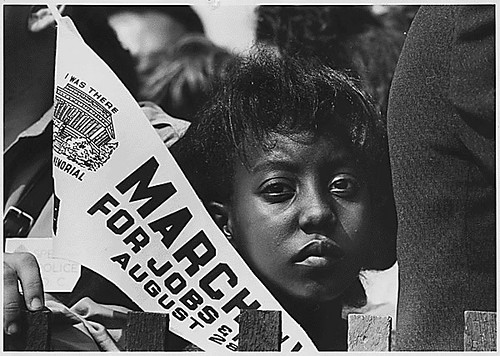
One of the most significant struggles for social justice was the civil rights movement which took place mainly during the 1950s to 1960s. During this era, people rallied for political, legal, and social change related to segregation and discrimination. Arguably one of the most famous events during the civil rights movement was the “March on Washington” which took place on August 28, 1963. The march was attended by various civil rights leaders to include Dr. Martin Luther King Jr. who is one of the most influential African American civil rights leaders of all times. It was at this event that Dr. King delivered his famous, “I Have A Dream” speech.

Dr. King was instrumental in the passage of the Civil Rights Act of 1964 and the Voting Rights Act of 1965. Dr. King was also awarded the Nobel Prize for Peace in 1964. He was assassinated on April 4, 1968. His achievements are celebrated annually nationwide on Martin Luther King, Jr. Day which is held the third Monday of January.

During the 1960s, The Civil Rights Movement provided a road-map for other social justice movements such as the Gay Rights Movement (https://www.history.com/topics/gay-rights/history-of-gay-rights) and the American Indian Movement (AIM) (https://www.history.com/this-day-in-history/aim-occupation-of-wounded-knee-ends). The 1960’s decade was also a progressive time for the Women’s Rights Movement (a movement which began in the 19th century).

The human brutality during the Civil Rights Movement attracted international condemnation and affected the United States influences around the world. It also left some to question if the U.S. had a commitment to freedom and human rights.

Our civil liberties and freedoms are a precious gift that have been bequested to us through the personal

sacrifices of others. Some of the ways we can express our gratitude for these sacrifices are: remaining in a state of continuous gratitude, understanding our history, having meaningful conversations about race and social justice, and continuously taking actions against racial and social injustices.

(1) KNOW YOUR HISTORY

George Santayana once said, “Those who do not remember the past are condemned to repeat it.”

On the evening of April 14, 1865, a well known stage actor and Confederate sympathizer (John Wilkes Booth) assassinated President Abraham Lincoln. President Lincoln was one of the most influential presidents in the United States History and was known for his leadership during the American Civil War and also his support of civil liberties, by signing the Emancipation Proclamation, an executive order freeing slaves. Decades later another influential president, John F.Kennedy, who also supported civil liberties was also assassinated on November 22, 1963. Both presidents were shot on a Friday with a fatal bullet to the head. Oddly, both of their successors had the last name of “Johnson” (Andrew Johnson and Lyndon B. Johnson).

It is not uncommon for those who support social justice and qualities to pay the price of their beliefs with their life. It is therefore, not only important to remember the sacrifices of others, but discover ways that we can co-exists despite our differences.

(2) HAVE MORE MEANINGFUL CONVERSATIONS ABOUT RACE

“Be brave enough to start a conversation that matters”

Margaret Wheatley

Brave conversations starts in our home. Parent(s) are very influential and in a healthy home environment, they can be our best teachers. If you grow up in an environment, for example where being a certain color makes you more superior or that one race is “purer” than another, then you will begin to believe this. However, as we teach our children or as we having meaningful conversation about race, it is important facts, such as “pure” races do not exist today in the sense of genetically homogeneous population. https://physanth.org/about/position-statements/aapa-statement-race-and-racism-2019/.

(3) TAKE ACTION AGAINST RACIAL AND SOCIAL INJUSTICE.

Congressman John Lewis was affectionately known as the “Conscious of Congress”. For more than five decades, Lewis was a champion for peace, justice and equality. Some of his work included: being one of the nonviolent Freedom Riders who were beaten and arrested in the South, leading over 600 demonstrators in march across the Edmund Pettus Bridge in Selma Alabama and being brutally attached by state troopers, and delivering a speech during the 1963 March on Washington event. Additionally, although Lewis was arrested more than 40 times for civil rights activities, he took it in stride. He also is famously known as saying this about getting in trouble, “Ordinary people with extraordinary vision can redeem the soul of America by getting in what I call good trouble, necessary trouble”.

LEGENDS AND LEGACY

https://open.spotify.com/

“We build our legacy piece by piece, and maybe the whole world will remember you or maybe just a couple of people, but you do what you can to make sure you’re still around after you’re gone.”…. David Lowery

Traditionally, legends have been defined as a story about human events or actions that have not been proven nor documented in real history. However, legends can also relate to people who are very famous and widely known for doing something special either in the present or in the past.

A legacy, on the other hand, is anything handed down from the past such as from an ancestor to a predecessor. Metaphorically, leaving a legacy is like planting a seed in a garden that you may never get to see blossom while others reap the fruits of your labor.

Ones legacy can either be positive or negative. In many people’s eyes, the former chancellor of Germany, Adolf Hitler, left a negative legacy due to his anti-semitic beliefs which resulted in the Holocaust (the systematic murder of millions of jews between 1941-1945 because they were deemed to be an inferior race and a threat to the German racial purity).

Former United States President Abraham Lincoln, on the other hand was considered one of the greatest presidents in the nation and is widely known for guiding the nation through a tumultourus Civil War that preserved the Union. Lincoln is also known for issuing the Emancipation Proclamation that freed the slaves. He also supported may other important bills during his administration such as the 1862 Pacific Railway Act, the 1862 Homestead Act and the establishment of the USDA in 1862.

Leaving a positive legacy or becoming legendary is within the realm of possibility for us all. Sometimes legacy can involve passing on fiancial wealth. However, it can also involve making a significant contribution to the world either in a ‘one on one’ relationship or on a much larger scale.

However, to effectively leave a positive legacy requires a few key ingredients:

(1) PURSUING YOUR PASSION

Since 2007, CNN has aired a television program known as: CNN Heroes: An All-Star Tribute. The program honors individuals who have made significant contributions to society. The winner of the CNN Hero award receives $100, 000 to expand their work. The 2019 winner of this prestigious award was Freweini Mebrahtu for her work involving designing a reusable menstrual pad to help keep girls in school in Ethiopia due to the cultural stigma surrounding the menstrual cycle. This cultural stigma consisted of ostracizing and humiliating girls and women during their monthly cycle. However, the creation of the reusable menstrual pad, which was patented in 2005, helped bring dignity to many girls and women. Since this time, more than 800,000 girls and women have benefited from Mebrahtu’s work. Mebrahtu is an example of someone who truly embraced her passion, despite how trivial or unimportant her mission may have seemed to some.

(2) HOLDING FAST TO YOUR VALUES

Evangelical Christian pastor, author, educator, and radio preacher Charles. R. Swindoll once said, “Life is 10% what happens to you and 90% how you react to it.” One person’s life that was very demonstrative of this was former South African President Nelson Mandela. Mandela was the country’s first black president that was elected in a fully democratic election. Mandela, who had been a human rights activists for years, helped bring an end to apartheid in South Africa and he also remained a devoted champion for peace and social justice internationally until is death in 2013 at the age of 95. He was also jointly awarded the Nobel Prize for Peace in 1993 for his efforts in help to end apartheid. However, despite how glorified his life and story may seem, his great legacy came with a price, which involved being jailed for a third of his life (from 1962 to 1990).

Of the many things Mandela has said about his time in in prison was this: “As I walked out the door toward the gate that would lead to my freedom, I knew if I didn’t leave my bitterness and hatred behind, I’d still be in prison.” Indeed, Mandela found the secret to inner peace by letting go of the past, holding holding on to his values, and also recognizing the healing power of forgiveness.

(3) SERVING OTHERS

Mother Teresa once said, “Let no one ever come to you without leaving better and happier. Be the living expression of God’s kindness: kindness in your face, kindness in your eyes, kindness in your smile.”

Mother Teresa is considered one of the 20th Century’s greatest humanitarian. She was the founder of the Order of the Missionaries of Charity, which focused on helping the sick and the poor. In 1979, Mother Teresa received the Nobel Peace Prize for her humanitarian work and was canonized as Saint Teresa of Calcutta in 2016.

Mother Teresa committed herself to her religious vocation at an early age. When she was 18, Mother Teresa, who was known by her birth name of “Agnes” at the time, left home and joined the Sisters of Loreto in Rathfarnham, Ireland. Her unwavering commitment to serve society and mankind was greatly recognized by students and teacher until her death in September of 1997.

NEW BEGINNINGS

https://open.spotify.com/

“Why let go of yesterday? Because yesterday has already let go of you.”
— Steve Maraboli

There are some things in our lives that we may wished that we could erase. These are usually painful experiences like the loss of an important relationship, the loss of a job or the death of a loved one. No decision that we make can be undone neither can the painful things that happen to us or around us. However, this doesn’t mean that we can’t recover and start a fresh journey. Sometimes recovery happens with the assistance of a therapist, counselor, family, or friends. However, research also shows that new beginnings in our lives can also occur as a result of the “Fresh Start Effect” which are inspired by special occasions or distinct events known as “temporal landmarks”.

According to behavioral scientists,“temporal landmarks” gives life structure and boost our motivation to pursue goals. Examples of “temporal landmarks” include: beginning of a new year, start of a new week, special occasions (like birthdays or anniversaries), moving to a different location, a job change, or a romantic breakup.

Here are three important tips as you embark on your new journey:

  1. DON’T BE AFRAID TO FAIL

Albert Einstein once said, “Anyone who has never made a mistake, has never tried anything new”.

When we set out on a new path, there are going to be dangerous roads and pitfalls. It’s simply a part of life. We have all failed at something at some point in our lives, whether it involved a relationship, a job or school. We also often fail as we are trying to gain our indepence such as when learning how to drive a vehicle, learning how to ride a bike without training wheels or learning how to cook a meal with ruining it or always having to follow a receipe.

Winston Churchill once said, Success is not final, failure is not fatal; it is the courage that counts”.
Find comfort in knowing that failing is something that we all have in common….so go forth without fear!

  1. CELEBRATE EVERY MILESTONE

“Rome wasn’t built in a day” is an idiom which means that major achievements take time.

Everyone’s journey through life is different. Influencing factors include: family upbringing, cultural norms, personal values, and our social environment. There also may be personal sacrifices that you make that others may never understand, yet these sacrifices were/are a tremendous milestone along your personal journey towards achieving your goals.

Celebrating your milestones are so very important even if you have to sometime do it ‘inwardly and alone’. Keep in mind that sometimes some of our greatest achievements and breakthroughs may happen when no one is watching.

  1. STEP OUTSIDE YOUR COMFORT ZONE AND TRY NEW THINGS

The journey towards starting afresh can be intimidating. However, to effect change may sometimes required that you do new things. For example, if you are interesting in embarking on a new relationship, this may require you to explore new dating opportunites like joining dating sites, meet up group, etc. If your goal is to lose weight, perhaps it’s time for you to consider joining a support group so that you want feel isolated on your journey towards improving your health.

The New Year is an good time to set new goals, change habits, and recover from painful memories and experiences. You hold the key to ‘your’ brighter tomorrow!